🎾🔥 Emma Raducanu Finally Finds Her Rhythm — The “Stacking Good Days” Secret That Could Change Everything…
Deprecated: preg_split(): Passing null to parameter #3 ($limit) of type int is deprecated in /home/ecoirdaz/facetechcourses.com.ng/wp-content/themes/jannah/framework/functions/post-functions.php on line 863

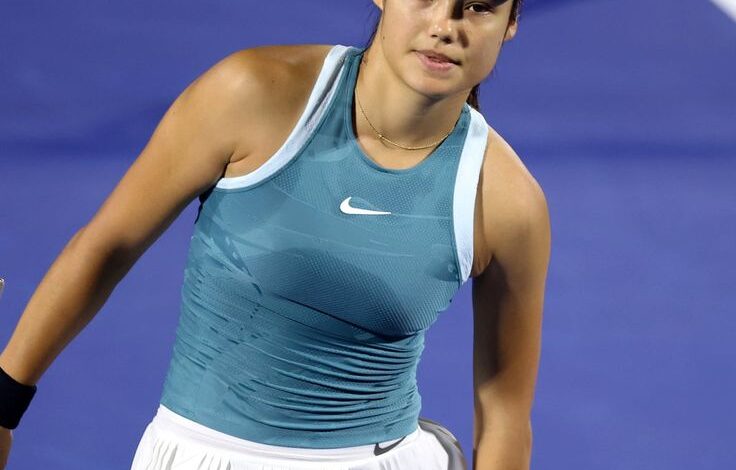
Emma Raducanu’s journey since her astonishing 2021 US Open triumph has been anything but straightforward. Injuries, coaching changes and the weight of expectation have interrupted her momentum, but as the new season approaches, the British star appears quietly optimistic. The headline that Raducanu has “found rhythm for the new season with stability and ‘stacking good days’” captures a shift not just in results, but in mindset — one that could prove decisive for the next chapter of her career.
At just 22, Raducanu has already experienced extremes that many players encounter over an entire career. Her meteoric rise brought global fame and commercial success, but also relentless scrutiny. In recent seasons, physical setbacks limited her match play, while frequent changes behind the scenes made consistency elusive. Entering the new season, however, Raducanu is emphasizing something refreshingly simple: routine, health, and gradual progress.
The phrase “stacking good days” has become central to her outlook. Rather than chasing instant breakthroughs or measuring success solely by trophies, Raducanu is focused on repeatable habits — solid training sessions, pain-free weeks, and incremental improvements. In elite sport, where margins are razor-thin, this approach reflects maturity. It suggests a player who understands that long-term success is built through accumulation, not acceleration.
Stability has also become a key pillar of her preparation. After years marked by stop-start momentum, Raducanu has prioritized continuity in her training environment and support team. This stability is allowing her to rebuild trust in her body, an essential step after injury-plagued periods. Confidence on the court often begins with confidence off it, and Raducanu’s renewed sense of control appears to be translating into sharper movement and freer shot-making.
Technically, signs of rhythm are emerging. Raducanu’s timing off the ground — once a defining feature of her game — looks increasingly reliable. Her aggressive baseline play, built on early ball-striking and clean hitting, depends heavily on physical readiness. As her fitness improves, so too does her willingness to commit to her natural attacking instincts. That freedom was evident during her breakthrough season, and rediscovering it could be the key to sustained success.
Equally important is the mental reset Raducanu seems to have embraced. The pressure of living up to a Grand Slam title at such a young age can distort expectations, both internally and externally. By reframing her goals around process rather than outcomes, she is insulating herself from the constant noise of rankings and comparisons. This perspective allows room for setbacks without derailing progress — a crucial mindset for a player still developing.
The women’s tour remains fiercely competitive, with depth and athleticism at an all-time high. For Raducanu, returning to the upper echelons will not be a linear path. Yet her current approach suggests she is prepared for that reality. Instead of forcing form, she is letting it emerge naturally through consistency and patience.
As the new season unfolds, expectations will inevitably follow her onto the court. But Raducanu’s emphasis on stability and “stacking good days” hints at a more grounded, resilient competitor. If she can stay healthy and maintain this rhythm, results are likely to follow. For now, the most encouraging sign is not a single standout performance, but the quiet confidence of a player rebuilding her foundation — one good day at a time.
Deprecated: preg_split(): Passing null to parameter #3 ($limit) of type int is deprecated in /home/ecoirdaz/facetechcourses.com.ng/wp-content/themes/jannah/framework/functions/post-functions.php on line 863