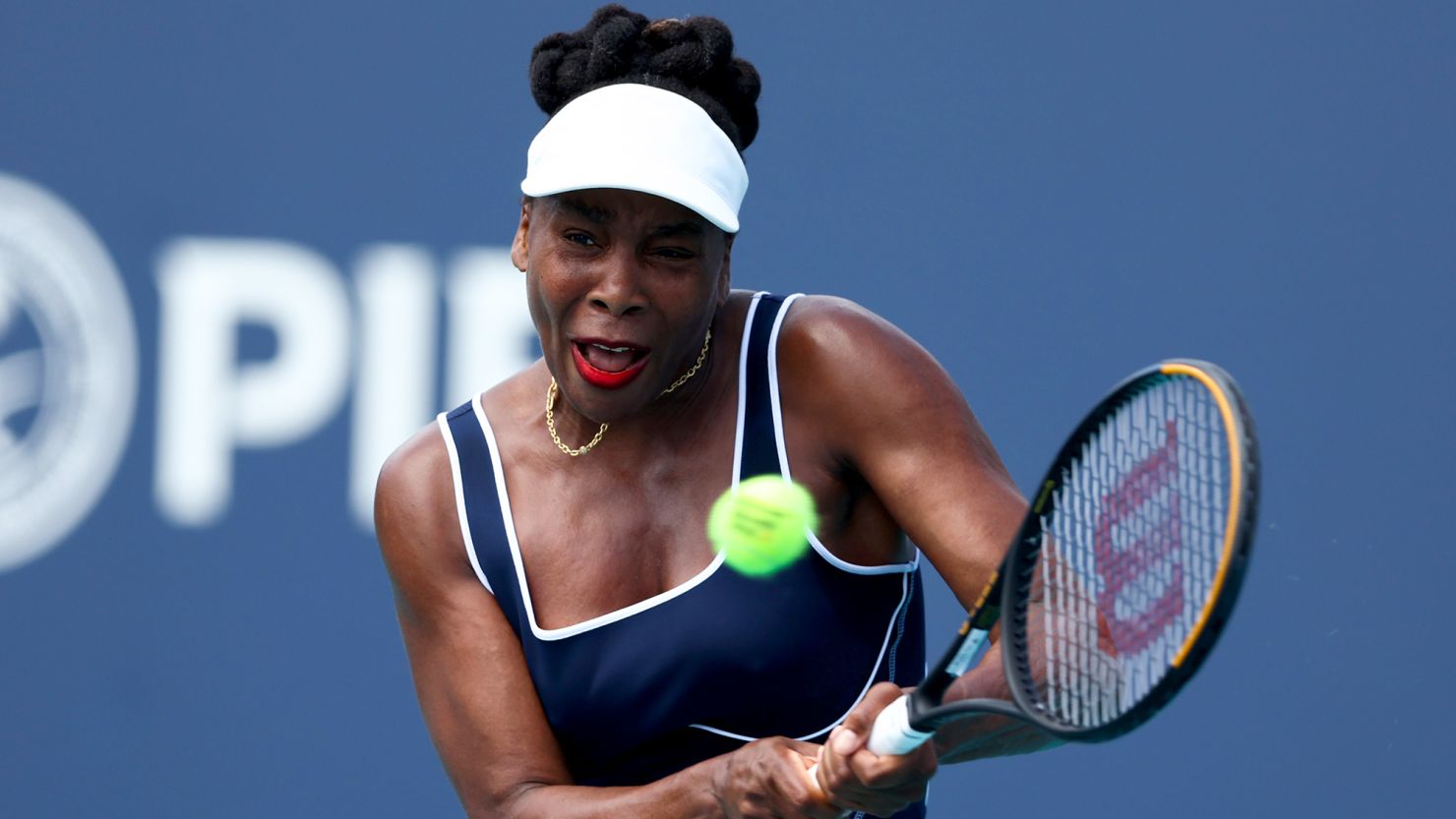
Serena Williams’ Return Talk Rekindles Debate Over Comebacks and Competitive Reality
Deprecated: preg_split(): Passing null to parameter #3 ($limit) of type int is deprecated in /home/ecoirdaz/facetechcourses.com.ng/wp-content/themes/jannah/framework/functions/post-functions.php on line 863


Serena Williams refusing to rule out a return to tennis is enough, on its own, to reignite global speculation. Few athletes command that level of gravitational pull. Yet beyond the headlines, the question her comments raise is less about intent and more about plausibility: what would a Serena comeback actually look like in today’s women’s game?
Williams last competed at the 2022 US Open, exiting in the third round after matches that showed flashes of her historic dominance but also the physical toll of time and interruption. Since then, the WTA Tour has continued to evolve. The average age of top-10 players has fallen slightly, match tempo has increased, and baseline power has become even more relentless. Any potential return would therefore not be to the tour Williams left, but to one that has subtly shifted in her absence.
From a statistical standpoint, Serena’s late-career profile already showed the challenge ahead. In her final full seasons, her serve remained elite by any historical measure, still ranking among the best in first-serve points won. However, movement metrics and rally tolerance began to show decline. Points extending beyond five shots increasingly favored her opponents, a key indicator in a modern game that demands both power and repeatable endurance.
That does not mean a return would be symbolic or futile. Even at reduced mobility, Williams’ serve-plus-one patterns remained devastating. Data from her last appearances showed that when she landed over 60% of first serves, she was still capable of beating top-20 opposition. The problem was sustainability: maintaining that level across multiple matches in a major tournament setting proved difficult.
Age, of course, is the central variable. If Williams were to return in 2026, she would be in her mid-40s—territory virtually unexplored in elite singles tennis. The physical demands of the WTA Tour have only intensified, with longer rallies, heavier balls, and deeper fields. The historical comparison points are limited. Martina Navratilova’s late-career success came primarily in doubles, where movement demands are reduced and tactical intelligence can offset physical decline.
What complicates the analysis is Serena’s uniqueness. She has never relied solely on speed. Her game has always been built on serve dominance, anticipation, and psychological pressure. Those traits age better than pure athleticism. In short-format matches or selective scheduling, she could still be competitive. Wildcards into high-profile events would almost certainly be available, and early-round matchups could be manageable.
Yet sustained competitiveness is another matter. The current top players combine power with relentless physicality. Against them, small deficits become magnified. Even a five to seven percent drop in movement efficiency can turn neutral rallies into defensive scrambles. Over a two-week Grand Slam, that margin is often decisive.
There is also the question of motivation. Comebacks succeed most often when driven by clear, narrow goals. If Williams were chasing a specific milestone or selective appearances rather than a full-time return, the equation changes. Short runs, exhibition-level intensity, or targeted Grand Slam entries would play to her strengths and limit exposure.
From a broader perspective, Williams’ refusal to rule out a return speaks as much to legacy as logistics. In modern tennis, retirement has become increasingly fluid. Players step away, reassess, and sometimes re-enter competition on revised terms. Williams’ comments fit that pattern, keeping optionality alive rather than committing to a definitive path.
The reaction also reveals something about the sport’s current landscape. Women’s tennis, for all its depth, still orbits around generational figures. Serena remains the benchmark, the reference point against which eras are measured. Any hint of her return inevitably invites comparison—not just to her past self, but to what dominance now looks like.
Realistically, a return would be extraordinary rather than expected. The barriers are substantial, and the upside is uncertain. But Serena Williams has built her career on defying conventional timelines and assumptions. If nothing else, her comments remind the sport that its most transformative figure still has the power to shape conversation without hitting a single ball.
Whether she returns or not, the speculation itself underscores her enduring relevance—and the fact that, in tennis, legends never fully leave the stage.
Deprecated: preg_split(): Passing null to parameter #3 ($limit) of type int is deprecated in /home/ecoirdaz/facetechcourses.com.ng/wp-content/themes/jannah/framework/functions/post-functions.php on line 863