Australian Open: Jessica Pegula knocks out defending champion Madison Keys to reach quarter-finals – and avoids wearing Kansas City Chiefs jersey
Deprecated: preg_split(): Passing null to parameter #3 ($limit) of type int is deprecated in /home/ecoirdaz/facetechcourses.com.ng/wp-content/themes/jannah/framework/functions/post-functions.php on line 863

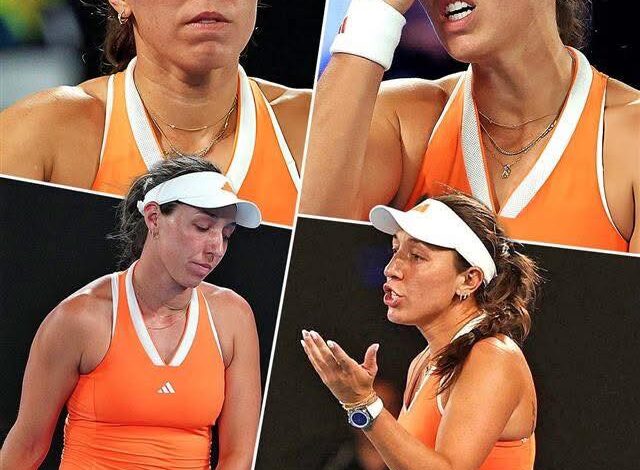
Jessica Pegula’s straight-sets victory over defending champion Madison Keys at the Australian Open was decisive on the scoreboard, but the deeper significance lies in what it revealed about the tournament’s shifting power dynamics. Pegula’s win not only ended Keys’ title defence in the fourth round, it also reinforced why she remains one of the most reliable disruptors at the business end of Grand Slams—even without the headline-grabbing peaks of some of her rivals.
Statistically, the match followed a pattern that has increasingly defined Pegula’s success against elite opponents. She won a high percentage of points in the neutral phase of rallies, particularly those extending beyond four shots. Against Keys, whose game is built around first-strike power, Pegula consistently absorbed pace and redirected it deep, forcing errors rather than chasing winners. The numbers underlined the contrast: Keys struck more winners, but her unforced error count climbed steadily as the match wore on.
Serve efficiency proved decisive. Pegula won close to two-thirds of points behind her first serve and, crucially, protected her second serve far more effectively than Keys. Defending champions often fall at majors not because of dramatic collapses, but because small margins disappear. Keys’ second-serve win rate dipped below the level typically required to survive against top-10 opposition, allowing Pegula to control return games without needing to take excessive risk.
The result also continues a broader trend at Melbourne Park. Over the past five editions of the Australian Open, defending champions have struggled to replicate title-winning form, with early exits becoming increasingly common. The depth of the women’s field has compressed margins, making sustained dominance harder to achieve. Pegula’s consistency, rather than explosive brilliance, is particularly well-suited to exploiting that environment.
Off court, Pegula’s light-hearted avoidance of wearing a Kansas City Chiefs jersey—a nod to her family’s NFL connections—became a talking point, but it also reflected her approach to the tournament. She has long been careful about separating external narratives from competitive focus. Performance data supports that mindset: Pegula’s match-to-match variance at majors is among the lowest in the top 10, indicating a player whose output is largely insulated from distraction.
Elsewhere in the draw, the quarter-final landscape has sharpened dramatically. Iga Swiatek’s progression sets up a blockbuster clash with Elena Rybakina, a matchup that has become one of the most analytically intriguing on the tour. Swiatek’s dominance is built on relentless baseline pressure and defensive coverage, while Rybakina’s serve-first aggression consistently tests even the most resilient returners. Historically, their head-to-head has swung on first-serve effectiveness: when Rybakina lands above 60%, she levels the contest; when she drops below it, Swiatek’s rally control takes over.
Pegula’s presence in the quarter-finals adds another layer to that picture. While she may not generate the same anticipation as Swiatek or Rybakina, her record against top-five players at majors is stronger than often assumed. She has repeatedly reached the latter stages by neutralising weapons rather than matching them outright, a strategy that becomes increasingly valuable as matches lengthen.
For Keys, the defeat is sobering but not anomalous. Defending champions carry statistical and psychological burdens that are difficult to quantify but consistently observable. Her performance levels were not dramatically below her title-winning baseline, but the margins that favored her last year—short rallies won, second-serve resilience—tilted the other way. Against a player as stable as Pegula, that shift is often terminal.
As the Australian Open moves into the quarter-final stage, the tournament narrative is crystallising around contrast rather than hierarchy. Power versus precision. Aggression versus absorption. Pegula’s win over Keys is emblematic of that tension. It shows that in today’s women’s game, control and repeatability can be just as decisive as raw firepower.
With the draw now stripped of the defending champion and marquee matchups looming, Melbourne Park is set for a closing week defined by fine margins. Pegula’s quiet efficiency has already redrawn the landscape once. The question now is how far it can carry her.
Deprecated: preg_split(): Passing null to parameter #3 ($limit) of type int is deprecated in /home/ecoirdaz/facetechcourses.com.ng/wp-content/themes/jannah/framework/functions/post-functions.php on line 863