Fallon Sherrock Uncovered: Net Worth, Relationship With Ryan Meikle, and the Health Fight That Reframed Her Career
Deprecated: preg_split(): Passing null to parameter #3 ($limit) of type int is deprecated in /home/ecoirdaz/facetechcourses.com.ng/wp-content/themes/jannah/framework/functions/post-functions.php on line 863

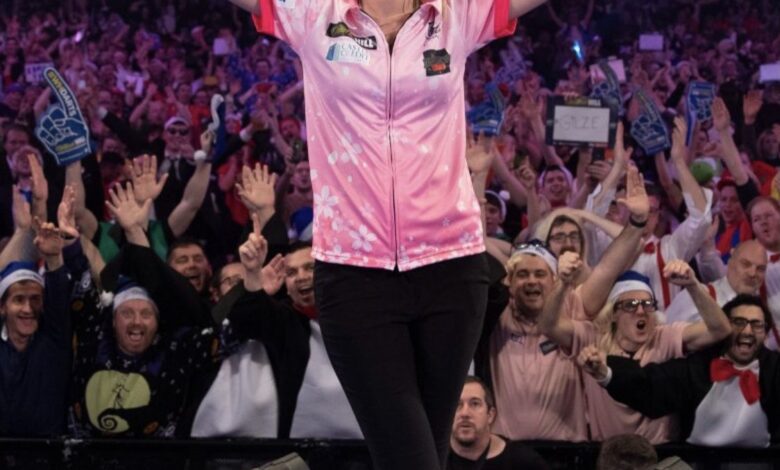
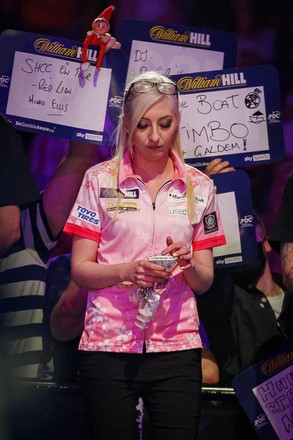
Fallon Sherrock’s story has rarely been a simple one. Since becoming the first woman to win a match at the PDC World Darts Championship, she has occupied a unique space in the sport—simultaneously a trailblazer, a commercial figurehead, and a competitor navigating structural and personal challenges. Recent interest in her net worth, her relationship with fellow professional Ryan Meikle, and her long-running health battle reflects a broader attempt to understand where Sherrock now stands in her career, and how she has adapted rather than faded.
Financially, Sherrock is one of the most successful women darts players of her era, even when judged against male counterparts. Her estimated net worth is reported to be in excess of £1 million, a figure that far outstrips what prize money alone would suggest. The women’s game, particularly within the PDC structure, does not yet offer earnings on the scale of the men’s tour. Sherrock’s wealth has therefore been built largely through sponsorship, endorsements, media work, and appearance fees.
Brands such as Diamond Draws Competitions and L-style Darts Accessories have partnered with her, drawn by a profile that extends well beyond results tables. In niche sports like darts, visibility and recognisability often matter as much as rankings, and Sherrock remains one of the most instantly recognisable figures in the game. This diversified income has given her a level of financial security uncommon in women’s darts, insulating her from the volatility that comes with short-format tournaments and qualification-based access.
That financial stability has intersected with her personal life in important ways. Sherrock’s relationship with Ryan Meikle, himself a professional darts player, has been a subject of periodic attention, though both have kept it relatively private. Within the darts circuit, shared relationships are not unusual, and there is little evidence that the partnership has negatively affected either player’s performances. If anything, operating within the same professional environment brings a shared understanding of travel demands, pressure, and competitive uncertainty.
The most significant factor shaping Sherrock’s recent career, however, has been her health. She has spoken openly about a kidney condition, first treated in 2017, which requires ongoing management. The condition has affected her hydration, energy levels, and recovery, all critical in a sport where players can face long days and repeated matches under intense concentration. At times, side effects such as facial swelling became public talking points, drawing online abuse and misunderstanding.
From a performance-analysis perspective, the impact of this health battle is visible in the data. Following her historic breakthrough, Sherrock’s match volume became inconsistent. Rather than a steady calendar, her participation fluctuated, leading to increased variance in results. Sports performance research consistently shows that irregular competition amplifies inconsistency, even when underlying ability remains intact. Sherrock’s averages did not collapse, but her results became more uneven.
In response, she recalibrated. Instead of chasing volume at all costs, Sherrock began prioritising sustainability. That approach has yielded quieter but tangible results. She currently sits second on the PDC Women’s Series Order of Merit, based on prize money earned, behind only Beau Greaves. That ranking reflects consistent deep runs rather than dominance, but it confirms her continued presence at the top end of the women’s game.
The broader context matters. The standard of women’s darts has risen sharply, with younger players entering earlier and building higher scoring ceilings. In that environment, Sherrock’s ability to remain second despite health challenges and selective scheduling points to resilience rather than regression.
Taken together, Sherrock’s net worth, her relationship, and her health fight tell a cohesive story. Financial security has allowed her to manage her career on her own terms. Personal stability has existed alongside professional pressure rather than being consumed by it. And her health battle has reshaped, not ended, her competitive ambitions.
Fallon Sherrock is no longer defined solely by a historic moment at Ally Pally. She is defined by adaptation—finding ways to remain relevant, competitive, and sustainable in a sport that rarely offers easy paths. Her story is less about what was lost, and more about what has been rebalanced.
Deprecated: preg_split(): Passing null to parameter #3 ($limit) of type int is deprecated in /home/ecoirdaz/facetechcourses.com.ng/wp-content/themes/jannah/framework/functions/post-functions.php on line 863