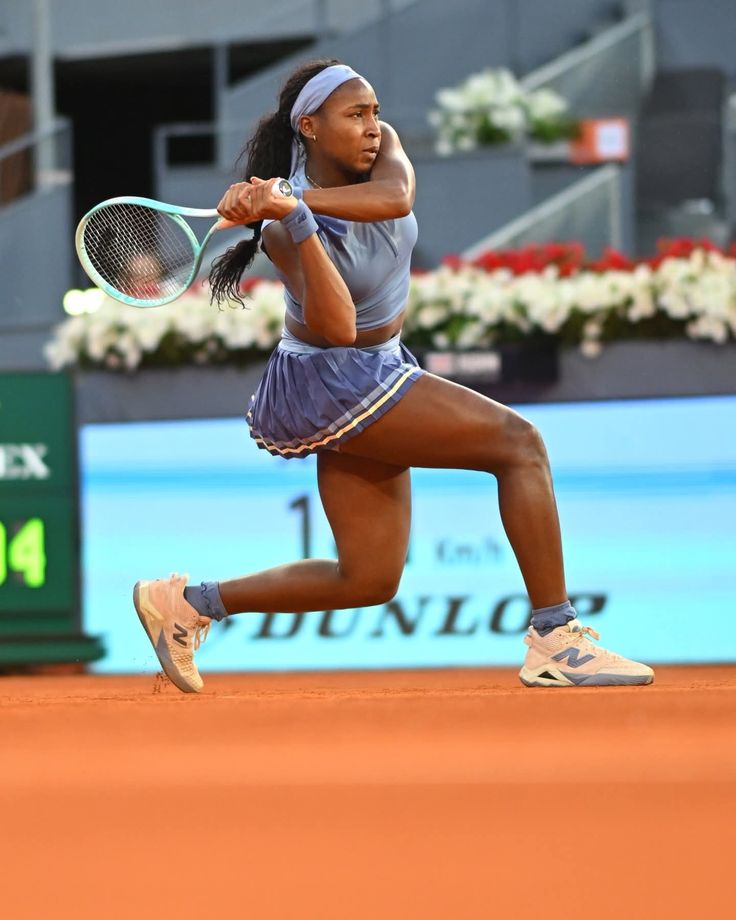
Jessica Pegula reflects on ‘amazing tournament’ at 2026 Australian Open
Deprecated: preg_split(): Passing null to parameter #3 ($limit) of type int is deprecated in /home/ecoirdaz/facetechcourses.com.ng/wp-content/themes/jannah/framework/functions/post-functions.php on line 863


Jessica Pegula’s description of her 2026 Australian Open as an “amazing tournament” is notable not for its emotion, but for its accuracy. Reaching the women’s singles semifinals in Melbourne represents her deepest run at the Australian Open and adds another data point to a career increasingly defined by reliability at the highest level. While Pegula has often been framed as tennis’s nearly-player, this tournament underlined why she remains one of the most dependable performers in the modern women’s game.
Statistically, Pegula’s Melbourne campaign stood out for its balance. Across six main-draw matches, she posted strong hold percentages, protected her second serve more effectively than the tournament average, and maintained one of the lowest unforced error counts among semifinalists. Her three-set resilience was particularly striking. Pegula won a high proportion of extended rallies, especially those lasting beyond five shots, reinforcing her reputation as one of the tour’s best problem-solvers under pressure.
This run also marked a shift in narrative. Pegula has reached multiple Grand Slam quarter-finals before, but converting those appearances into semifinal progression had proven elusive. At the 2026 Australian Open, she did so by leaning into her strengths rather than chasing stylistic reinvention. Her game plan was clear: absorb pace, redirect depth, and force opponents into uncomfortable shot selection. Against more aggressive hitters, that approach consistently tilted rallies in her favor.
Serve efficiency played a critical role. Pegula did not dominate with aces or raw power, but her placement and variety limited opponents’ ability to attack early. She won a solid majority of points behind her first serve and, more importantly, avoided the sharp drop-off on second serve that often decides matches at Grand Slams. In an era where return pressure is relentless, that stability proved decisive.
Pegula’s tournament also needs to be viewed in a broader performance context. Over the past three seasons, she has quietly built one of the strongest records at majors among players outside the very top tier. While she may lack the signature titles of some rivals, her consistency has translated into repeated deep runs. Data from recent Slams shows that Pegula ranks near the top of the field for matches won against top-20 opposition, an indicator of her ability to navigate difficult draws.
What made Melbourne particularly encouraging was how Pegula handled momentum shifts. In several matches, she lost control briefly before reasserting herself through patience rather than force. That trait is often undervalued, but it separates players who survive early rounds from those who reach the final weekend. Pegula’s mental reset ability—evident in tighter second sets and controlled third-set performances—was a defining feature of her run.
Her reflections after the semifinal defeat carried little sense of frustration. Instead, Pegula emphasized growth, opportunity, and belief. That response aligns with her career arc. At 31, she is no longer framed as a future prospect, but her game continues to evolve incrementally. Performance data suggests her ceiling may not have shifted dramatically, but her floor has risen steadily, making her one of the hardest players to knock out over two weeks.
The broader implications extend beyond one tournament. Pegula’s Melbourne success reinforces a key trend in women’s tennis: depth rewards consistency. With the field tightly packed and margins slim, players who minimize volatility often outlast those chasing constant peaks. Pegula embodies that principle. She does not overwhelm opponents, but she steadily reduces their margin for error.
Looking ahead, the challenge will be conversion. Semifinal appearances strengthen credibility, but titles remain the currency of legacy. To take the next step, Pegula will likely need marginal gains rather than transformation—slightly more assertiveness on short balls, incremental improvements in serve aggression, and continued physical durability.
For now, though, her assessment rings true. The 2026 Australian Open was an amazing tournament not because it changed who Jessica Pegula is, but because it confirmed it. She is one of the most reliable contenders in women’s tennis—a player whose consistency keeps her in the conversation, and whose latest run suggests she is closer than ever to breaking through on the sport’s biggest stages.
Deprecated: preg_split(): Passing null to parameter #3 ($limit) of type int is deprecated in /home/ecoirdaz/facetechcourses.com.ng/wp-content/themes/jannah/framework/functions/post-functions.php on line 863